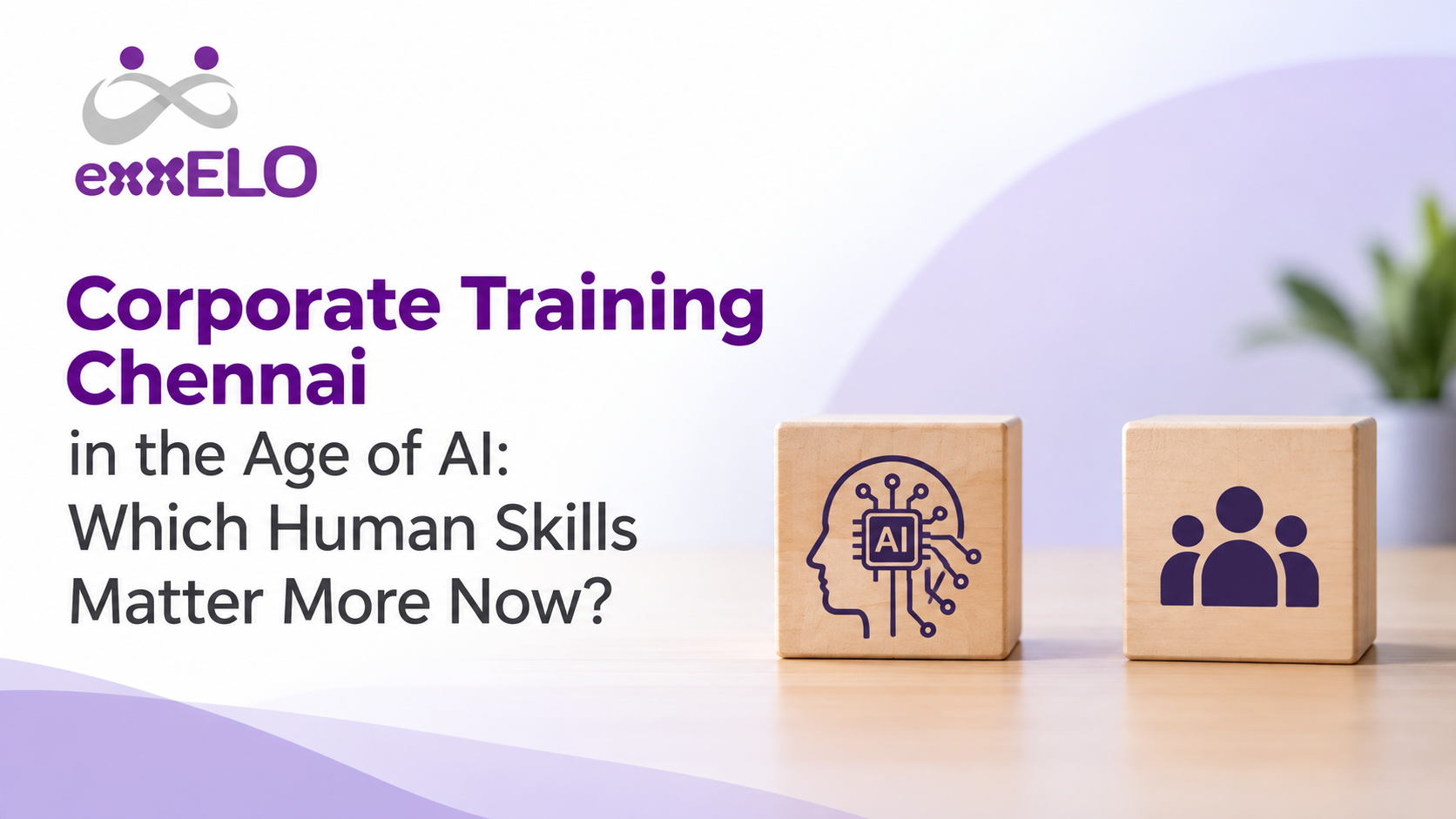
Ask a Chennai business owner what worries them most about artificial intelligence, and the answer is rarely the software. It is the people. Will the team trust the new tools? Will managers still lead well when a chatbot drafts half the reports? Investing in workforce training in Chennai once meant sending staff to a two-day session on presentation skills. Today the question is sharper. Which capabilities become more valuable as machines take over routine work? This article looks at the evidence, the human skills worth building first, and a practical way to turn them into everyday habits.
Why the AI Conversation Is Moving from Tools to People
Software Is the Easy Part
Many programme pages listed for Chennai right now concentrate on tools, such as prompt writing and popular chat assistants, often packed into two to five days. That has real value. Yet a person who can operate a tool is not automatically someone who can judge its output, explain a decision to a client or steady a nervous colleague. AI tools and capabilities can change rapidly, while judgement, trust and communication tend to remain important across technologies, which is exactly why they deserve a place in your development budget.
What the Global Data Says
The World Economic Forum's Future of Jobs Report 2025, based on responses from more than 1,000 employers, offers a useful reality check. Analytical thinking remains the most sought-after core skill, with seven in ten companies calling it essential. Resilience, flexibility and agility come next, followed by leadership and social influence. Technology skills such as AI and big data are growing fastest, yet creative thinking, curiosity and lifelong learning are also expected to gain importance through 2030. Workers can expect roughly 39 percent of their existing skill sets to be transformed or become outdated by 2030, and 63 percent of employers name the skills gap as the biggest barrier to business transformation. The gap, in other words, is not only technical. It also sits in how people think, adapt and work together.
Human Skills That Gain Value as AI Spreads
For companies weighing employee development programmes in Chennai, the question is no longer only which technical tools staff should learn, but which human capabilities will help them use those tools responsibly. Not every soft skill deserves equal attention, and the areas below connect most directly to how AI changes daily work.
Analytical and Critical Thinking
This tops the employer wish list for a reason. AI output arrives quickly and sounds sure of itself, which makes careful review more important, not less. Questioning What the Machine Produces AI systems can produce fluent answers that contain factual errors, unsupported claims or missing context. Teams need the habit of checking sources, testing assumptions and asking what is missing before a draft becomes a decision. Catching a shaky figure before it reaches a report is a habit worth training. Framing the Right Problem A tool answers the question it receives. Choosing that question remains a human task. Training built on real case material from your own operations helps people practise defining problems clearly before they ask any software for help.
Emotional Intelligence and Clear Communication
Automation trims routine work, which leaves people with the conversations that need care. Negotiating with a supplier, winning back an unhappy customer and giving honest feedback to a teammate all rely on listening, empathy and tone. Customer-Facing Conversations As chatbots and other self-service tools handle more routine queries, the cases escalated to human staff may increasingly involve complex, sensitive or exception-based situations. Frontline teams can benefit from stronger questioning and de-escalation skills as a result. Difficult Conversations Inside the Team Performance feedback, clashing priorities and change announcements cannot be handed to software. Rehearsing these situations in a safe setting gives managers a chance to practise their responses and build confidence before applying the skills at work.
Adaptability and Learning Agility
When tools evolve constantly, the ability to unlearn and relearn quickly becomes a core work skill. Resilience does not mean absorbing stress in silence. It means recovering, adapting plans and staying curious when a familiar process changes overnight.
Trust and Collaboration During Change
New tools land differently when people feel uncertain about their own roles. The same WEF survey found that almost half of employers expect to move staff from AI-exposed roles into other parts of the business. Open discussion about what a tool will and will not do can help teams build realistic expectations and support adoption. Honest updates from leaders and room to admit gaps in understanding are trainable habits, especially when managers model them first.
Creative Thinking and Ethical Judgement
AI can produce ten options in seconds. Deciding which one fits your culture, customers and values is still a human call. Add questions about data privacy, fairness and accountability, and employees clearly need the confidence to ask, “This looks efficient, but is it right?”
Why Managers Sit at the Centre of the Shift
The Accidental Manager Problem
Some managers move into leadership after strong technical performance, without equal opportunity to develop people-management skills. Once AI changes team workflows, they must redesign tasks, reassure anxious staff and set clear rules on how tools may be used. Without support, they either over-control or stay silent. Training for first-time managers that covers delegation, feedback and accountability closes this gap early, before habits harden.
Coaching Over Supervising
As routine checking becomes automated, a manager's value moves toward developing people. Coaching support for growing Chennai businesses gives senior leaders a trusted sounding board while they practise this shift, instead of working it out alone under pressure.
Building a Human Skills Programme That Sticks
Start with a Business Problem, Not a Course Name
Begin by naming the outcome you need, such as faster client response, fewer escalations or cleaner handovers between departments. Then identify the behaviours that drive it. A short diagnostic, using manager observation and a few stakeholder interviews, is usually enough to choose a focus. Selecting from a brochure skips this step and often produces generic content.
Practice Beats Presentation
Adults keep skills they use. Role plays built from real scenarios, coached practice and peer feedback give participants more chances to practise than lecture-heavy sessions alone. Blend in AI where it fits, for example by asking a team to critique a machine-written client email before anyone sends it.
Reinforce and Measure
A Practical 30/60/90-Day Follow-Up Framework Skills fade without reinforcement. Short check-ins, manager toolkits and small practice challenges help reinforce the behaviours introduced during training. Exxelo's training page lists follow-up sessions at 30, 60 and 90 days as part of its method. Metrics Worth Tracking Satisfaction scores indicate how participants perceived the session, but they do not by themselves show that workplace behaviour improved. Look instead at manager observations, customer feedback, error rates and turnaround times, compared before and after. Agree on them before the programme starts, so everyone judges success by the same yardstick.
When Training Alone Is Not Enough
Sometimes the diagnostic reveals problems that no workshop can solve, such as unclear roles, slow approval chains or mismatched targets. In those cases, an outside management consultancy in Chennai can review structure and reporting lines alongside the people work, so newly trained staff are not sent back into a system that holds them back.
A Simple Starter Plan for Chennai Teams
Chennai's economy includes manufacturing, IT services, financial services, healthcare and retail, and each sector feels AI differently. A plant supervisor needs help with accountability and communication as digital dashboards arrive. A services team needs sharper client conversations and stronger review habits. This sequence offers a practical starting point across sectors: 1. Choose one team and one measurable business problem. 2. Run a short diagnostic and pick two or three target behaviours. 3. Deliver a practical workshop built on real workplace situations. 4. Follow up for ninety days, then review results before expanding. Starting with a smaller pilot can limit the initial commitment and provide evidence before a wider rollout. It also lets you refine pacing and examples before a second cohort begins.
Frequently Asked Questions
Will AI make soft skills training unnecessary? No. Employers surveyed by the World Economic Forum expect creative thinking, resilience and curiosity to grow in importance. When routine tasks are automated, the remaining human interactions carry higher stakes. Which human skill should a team build first? Analytical thinking ranks highest among employers, but the right starting point depends on your business problem. A sales team may need stronger consultative conversations, while newly promoted managers may need feedback and delegation skills. How long should a programme run? A single workshop rarely changes behaviour on its own. One practical structure is a one- or two-day session followed by around three months of follow-up practice and manager support. Can a smaller company benefit from this approach? Yes. Start with one team and one focused problem. A brief diagnostic keeps spending on content that fits, rather than a broad package your people may not need. How do we know the training worked? Compare business measures before and after, such as customer feedback, error rates, turnaround time and manager observations. Attendance and satisfaction scores alone do not prove that behaviour changed.
Key Takeaway
AI will keep changing which tasks people perform, but it does not remove the need for judgement, empathy and adaptability. It raises that need. Organisations that pair tool skills with deliberate human-skills development can give employees stronger capabilities for decision-making, communication and adaptation during change. Begin with one team and one clear problem, then build from there. If you would like help choosing where to start, reach out to the Exxelo team for a conversation about your goals.
Ready to prepare your team for an AI-driven workplace? Talk to Exxelo about practical corporate training focused on the human skills your employees need to adapt and perform.
Talk to Exxelo