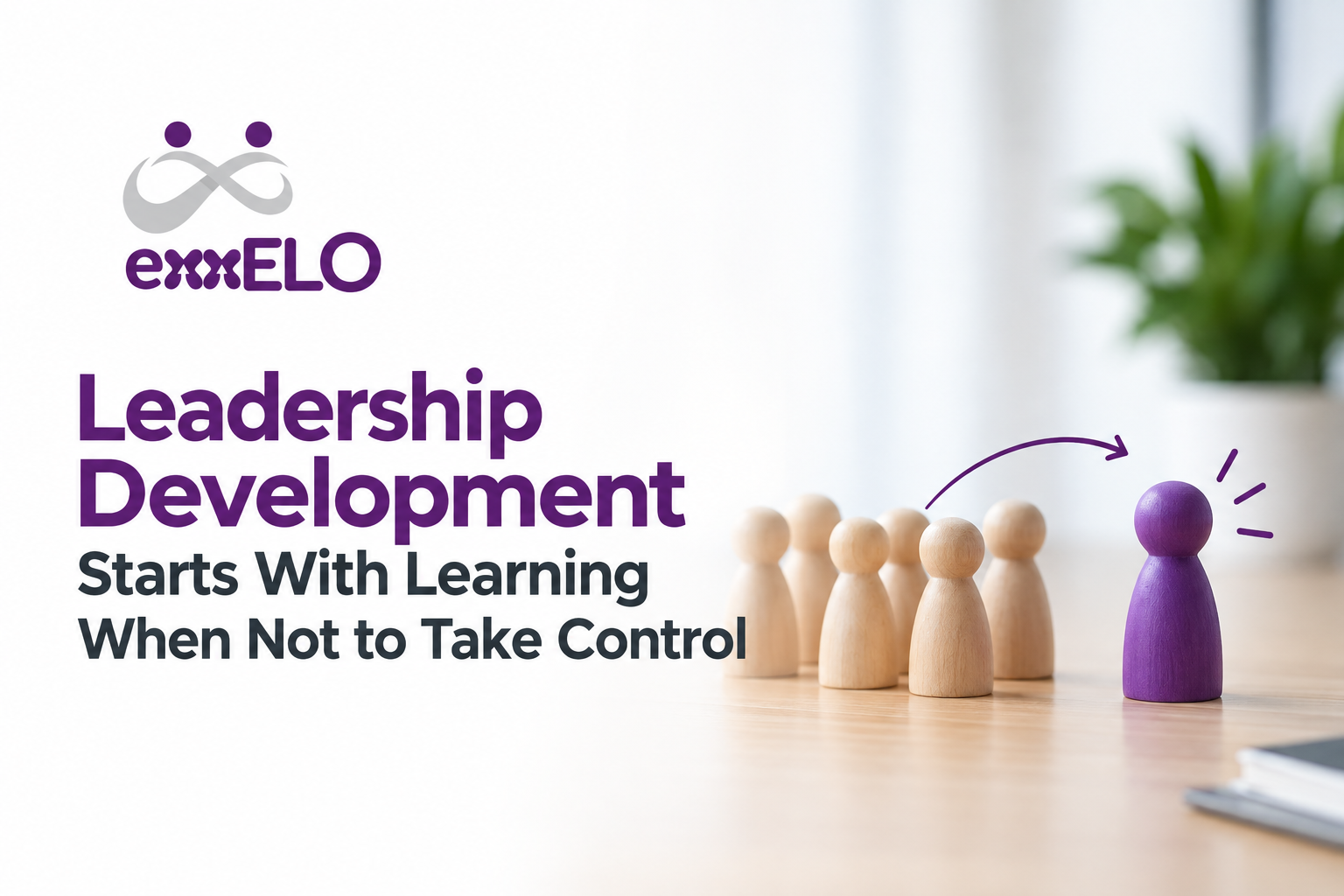
New leaders are often expected to solve problems, make quick decisions, and step in whenever something appears to be going off track. Yet the leaders who grow fastest often learn a different lesson early on: progress sometimes depends on stepping back rather than stepping in. This shift in mindset is central to good business coaching in Chennai, where professionals are trained to recognize that authority and control are not the same thing. Leadership development, at its core, is about knowing when your input helps a team and when it quietly gets in their way. The rest of this article looks at why that balance matters, and how it can be built deliberately rather than left to chance.
What Taking Control Actually Means in a Leadership Role
Control in a workplace rarely looks like shouting orders. It looks like rewriting an email a colleague already drafted, sitting in on every client call, or approving decisions that a manager two levels down is fully capable of making. Over time, these small acts of oversight add up. They can signal to a team that their judgment is not fully trusted, even when that was never the intention behind it. Most leaders who behave this way genuinely believe they are helping, not realizing that their presence has started to feel like a checkpoint rather than support.
The Difference Between Guidance and Control
Guidance points a team toward an outcome and lets them choose the path to reach it. Control decides the outcome and the path together, leaving little room for anyone else's thinking. Effective guidance can build capability, while excessive control can create dependence on the leader for routine decisions. A leader who answers every question before the team has a chance to work through it can reduce opportunities for people to develop their own problem-solving skills.
The Hidden Cost of Holding On Too Tightly
Holding onto control too tightly comes with costs that are easy to overlook because they build up slowly rather than appearing all at once.
It Slows Down Decisions
When one person has to approve or review too many decisions, that person can become a bottleneck for the operation. Projects wait, deadlines slip, and small issues turn into larger ones simply because nothing can move forward without a single signature or nod of approval.
It Discourages Independent Thinking
Teams that are used to checking in before acting eventually stop thinking ahead altogether. They wait for direction instead of proposing one, not because they lack ability, but because experience has taught them that their own decisions will likely be reworked anyway. Over months, this can quietly erode confidence, even among employees who were originally hired for their independent judgment.
Recognizing When Stepping Back Is the Right Call
Not every situation calls for restraint, and not every situation calls for intervention either. The real skill in leadership lies in correctly reading which one applies at a given moment.
Low-Risk, High-Learning Situations
If a decision carries limited downside but offers a genuine chance for someone to learn, it may be worth letting them handle it, even if their approach differs from what a leader might have chosen personally. Risk tolerance will vary by business, role, compliance requirements, and the type of decision involved, so this is a judgment call rather than a fixed rule.
When the Team Already Has the Answer
Sometimes a leader steps in purely out of habit rather than necessity. When the people closest to a problem already understand it better than anyone else in the room, taking over the decision only slows things down and can dilute the final outcome.
A Simple Way to Test This
Before stepping in, it helps to ask a single question: will my involvement actually change the result, or am I only getting involved because it feels uncomfortable to watch someone else handle it their own way. Honest answers to that question prevent a great deal of unnecessary interference. A related trap is mistaking activity for value. Many leaders equate being busy in every meeting and every decision with being essential, when in reality their constant presence can quietly signal that they do not yet trust the systems and people around them. The strongest leaders often make themselves less necessary for routine decisions by building capable people and reliable processes around them.
How Letting Go Actually Strengthens Leadership
Letting go of control does not weaken a leader's position. In practice, it tends to strengthen it, because a team's performance becomes a clearer measure of leadership than the leader's own visible activity.
From Doing the Work to Developing the Worker
Leaders who move up in responsibility often struggle the most with this shift. The skills that made someone a strong individual contributor, such as speed, precision, and hands-on problem-solving, are not necessarily the same skills required to develop others effectively. Some current workplace research, including Gallup's India-focused reporting, has encouraged organizations to select managers for talent and role fit rather than promoting people based purely on past performance or technical excellence. Growth into a senior leadership role often requires trading some of that hands-on control for patience, coaching, and a longer view of results.
Building a Culture Where People Take Ownership
When employees know they have appropriate authority to make decisions, they have more opportunity to develop judgment and learn from the outcomes. Giving people appropriate decision-making authority can create stronger conditions for ownership than relying on constant instructions. This is one reason leadership training programs can address delegation and decision rights alongside technical management skills and process knowledge, rather than treating management capability as something that automatically arrives with a promotion.
Signs Your Team Is Ready for More Autonomy
Recognizing that a team is ready for more independence usually shows up in small signals: fewer repeated questions on the same type of task, colleagues proposing solutions instead of only flagging problems, and steady results even when a leader is unavailable for a day or two. A practical way to track this shift is to note how often decisions come to a leader as requests for approval versus updates after the fact. Over time, a move toward more updates and fewer routine approval requests can indicate that decision-making authority is becoming more distributed, though there is no single ideal ratio to aim for.
Practical Ways Leaders Can Practice Restraint
Turning this idea into daily practice takes more than good intentions. It requires a few consistent habits, applied often enough that they become the default way of working rather than an occasional exception.
Delegate the Outcome, Not the Method
Instead of listing every step a task should follow, describe what success looks like and let the person choose how to get there. This single change opens room for creativity and can produce solutions a leader would not have considered on their own.
Ask More Than You Instruct
A short question such as, “What do you think we should do here?” shifts the responsibility for thinking back onto the team. It also gives a leader useful insight into how a colleague reasons through a problem, which is valuable information for coaching conversations later on.
Set Checkpoints Instead of Constant Oversight
Rather than monitoring work continuously, it helps to agree on a few points where progress will be reviewed together. This gives people room to work independently between checkpoints while still keeping accountability firmly in place. It is also worth separating feedback from the work itself. Commenting on every choice as it happens tends to feel like control in disguise. Saving observations for a scheduled review, and framing them as questions rather than corrections, keeps the learning intact without undermining the person's sense of ownership.
Long-Term Benefits for Organizations
Organizations that distribute decision-making appropriately can reduce unnecessary approval delays and give capable employees more opportunities to develop judgment. Over time, this can also help build a stronger internal pipeline of people ready to take on larger responsibilities. None of this happens automatically. It tends to follow from leaders who consistently choose to hold back when doing so is genuinely the more useful option.
Why Professional Guidance Helps During This Shift
Changing long-standing habits around control rarely happens on its own, since these habits are often tied to years of personal experience and, at times, to a leader's own sense of identity. Working with an experienced business consultant in Chennai can help identify where control may be applied out of habit rather than necessity, and help develop a more structured approach to delegation and decision-making. An outside perspective often turns a vague intention to lead differently into an actual, measurable change in daily behavior. This broader view is consistent with current thinking on management development. Guidance from bodies such as the CIPD points to structured development, coaching, training, and ongoing support as the way managers build these capabilities, rather than assuming the skills arrive automatically with a management title. Evidence in this area also points to the opportunity to apply new skills at work as a key factor in whether leadership learning actually takes hold, which supports the idea that leadership development works best when it involves practice, delegation, and feedback rather than classroom training alone.
Frequently Asked Questions
Does stepping back mean a leader becomes less involved overall? No. It means involvement shifts from controlling every outcome to supporting people, offering context, removing obstacles, and being available when genuinely needed rather than out of habit. How can a new manager start practicing this without losing accountability? Start with small, low-risk decisions and build up gradually as trust and results confirm that the team can handle greater independence over time. Keeping a short record of outcomes can make this progress easier to see and easier to justify to others. Is this approach relevant for small businesses as well as large organizations? Yes. In smaller teams, a single bottleneck can affect the whole group's workflow quickly, since there are usually fewer people available to absorb the delay. How long does it usually take to see results from this shift? The timeline varies by team, role, and how deeply the existing habits are embedded. Some changes may become visible within weeks or months, while broader changes in decision-making culture usually take longer and require consistent reinforcement.
Key Takeaway
Leadership development is not measured by how much a leader controls, but by how well a team performs when that leader is not in the room. Learning when to step back is not a sign of reduced authority. It is a sign of a leader who has built enough trust and capability around them that constant oversight is no longer necessary. If your organization is ready to build this kind of leadership culture, reach out and contact our team to discuss a development approach suited to your team.
Tue, Sep 8 at 12:45 PM Pasted markdown(20260908-070509).md File Pasted markdown(20260908-072124).md File Thursday 1:09 PM Pasted markdown(20260910-072901).md File do this Pasted markdown(20260910-080750).md File Today 3:11 PM Pasted markdown(20260917-094053).md File Based on the uploaded article, here are the CMS-ready SEO details. SEO Details Excerpt: Discover why high-performing employees can struggle after promotion and how leadership development, coaching, real-world practice, and feedback can build stronger managers. Category: Training and Development Read Time: 7 min Meta Title: Corporate Training vs Leadership Development | Exxelo Meta Description: Understand the difference between corporate training and leadership development and learn how coaching, practice, and feedback help new managers grow. CTA: Ready to prepare your newly promoted managers for leadership? Talk to Exxelo about combining corporate training, coaching, and leadership development around real workplace challenges. Primary Keyword: Leadership Development Programs in India Secondary Keywords: Corporate Training Programs in Chennai Leadership Development Training Leadership Training in Chennai Business Coaching in Chennai Manager Development Programs First-Time Manager Training Employee Training and Development Programs in Chennai Pasted markdown(20260917-095135).md File Based on the uploaded article, here are the CMS-ready SEO details. SEO Details Excerpt: Discover how learning when to step back can strengthen leadership, improve team ownership, reduce unnecessary approvals, and help managers build more capable and independent teams. Category: Training and Development Read Time: 7 min Meta Title: Leadership Development: When to Step Back | Exxelo Meta Description: Learn how leaders can balance authority and control through delegation, decision-making, coaching, and leadership development to build stronger teams. CTA: Ready to build a team that can take ownership without constant oversight? Talk to Exxelo about leadership development, delegation, and practical management training. Primary Keyword: Leadership Development Programs in India Secondary Keywords: Leadership Training Programs Leadership Development Training Leadership Training in Chennai Business Coaching in Chennai Business Consultant in Chennai Delegation and Decision-Making Manager Development Programs Today 4:29 PM Pasted markdown(20260917-104248).md File Based on the uploaded article, here are the CMS-ready SEO details. SEO Details Excerpt: Learn how leaders can step back without losing control by improving delegation, decision-making, team autonomy, coaching, and leadership development. Category: Training and Development Read Time: 7 min Meta Title: Leadership Development: When to Step Back | Exxelo Meta Description: Learn how leadership development helps managers balance authority and control through delegation, coaching, decision-making, and team autonomy. CTA: Ready to develop leaders who build capable, independent teams? Talk to Exxelo about practical leadership development focused on delegation, decision-making, and team ownership.
Talk to Exxelo