Manager-employee trust directly influences engagement, motivation and retention. When confidence is absent, even competitive pay struggles to keep people committed — which is why leading organisations treat trust as a teachable competence rather than an innate quality.
Why Trust Matters in Modern Workplaces
The manager-employee relationship often shapes how people perceive the whole organisation. Remote and hybrid arrangements have reduced spontaneous relationship-building, making intentional communication and reliability more essential than ever.
The Current Trust Landscape
Recent surveys indicate trust has deteriorated across many workplaces. Employees often express confidence in their employer in the abstract, but that trust erodes when applied to specific leaders, and teams receiving frequent recognition report markedly higher trust than those with little acknowledgement.
Core Trust-Building Behaviours
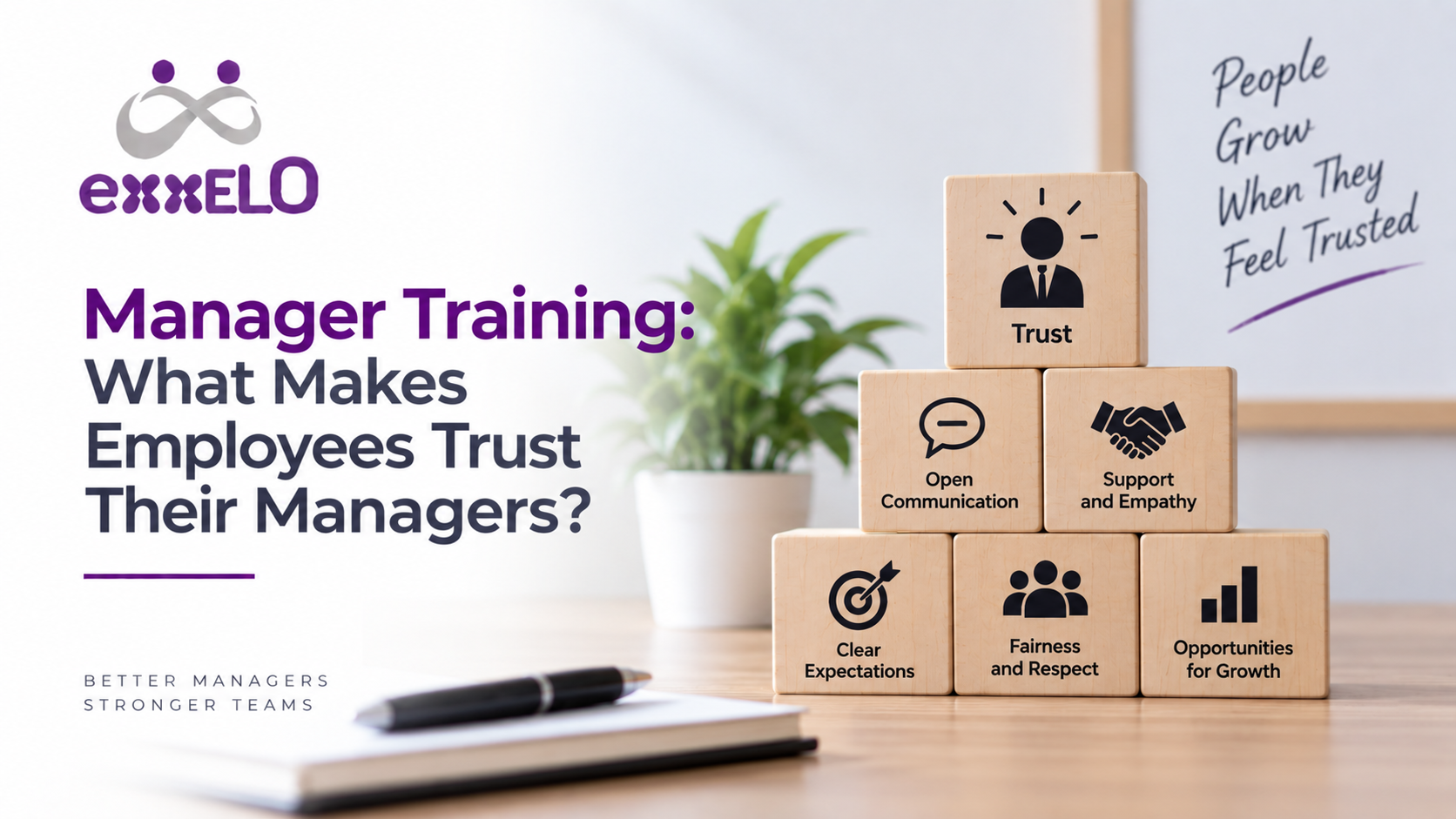
Transparent communication, genuine listening, consistent follow-through, regular recognition and fair treatment form the foundation of workplace confidence. Managers who stay honest during uncertainty, act on feedback, honour commitments and acknowledge contributions build credibility steadily over time.
Organisational Support for Trust
Companies should run structured leadership development, use coaching frameworks, and apply rigorous recruitment that emphasises communication capability and self-awareness when selecting managers.
Sustaining Trust Long-Term
Trust needs continuous maintenance through feedback loops where employee input demonstrably influences behaviour. Organisations that close those loops with transparent communication about what changed maintain higher trust year after year.
Key Takeaway
Organisational success depends on managers consistently demonstrating clear communication, authentic listening, reliable follow-through, recognition and fair treatment.
Exxelo's manager training builds the specific behaviours that earn — and keep — a team's trust.
Talk to Exxelo