Somewhere between getting the promotion and actually feeling like a leader, a lot of good managers quietly stall. They keep the title, they keep showing up, but something about the way they lead never quite catches up to the role they were handed. This is not a rare story. It happens across industries, across company sizes, and it happens to genuinely capable people, which is exactly why it deserves more attention than it usually gets. Many first-time managers only realize how wide this gap is once they are already standing in it, which is why businesses increasingly turn to business coaching in Chennai to help managers build the confidence and skills needed to lead others effectively, rather than simply hoping the transition sorts itself out.
Why So Many Good Managers Struggle to Become Leaders
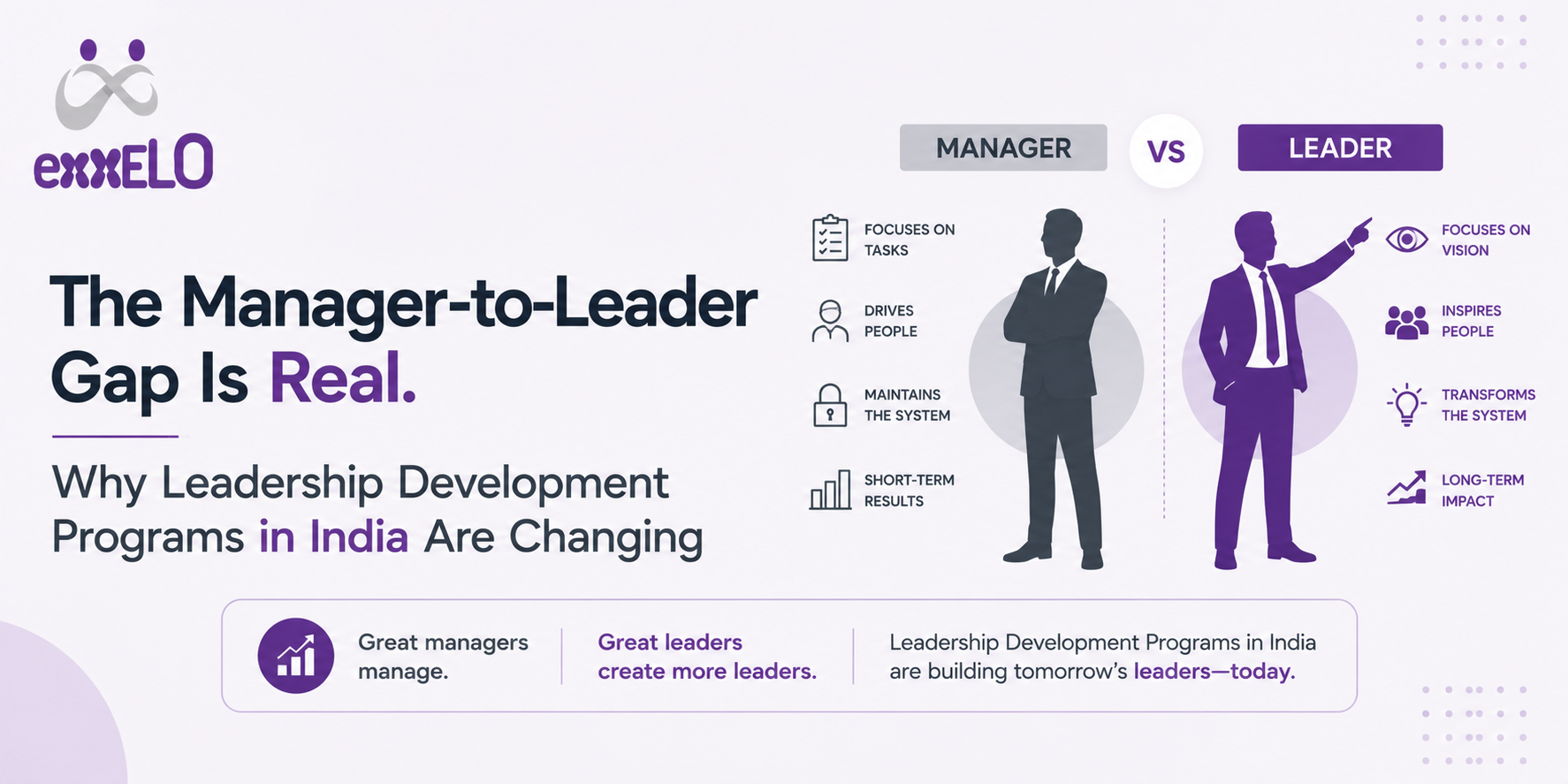
The promotion usually comes for the right reasons. Someone was excellent at the actual work, so the organization assumes they will be excellent at guiding others through it. That assumption is where things start to wobble. The Skills That Made You a Manager Aren't the Skills That Make You a Leader Being good at your job and being good at helping other people do their jobs are not the same skill, even though we tend to treat them as though they are. A brilliant engineer who gets promoted to team lead does not automatically know how to have a hard conversation about someone's underperformance, or how to sit with a team through a chaotic quarter without micromanaging every deliverable. In many organizations, they were never given structured preparation for that part of the role. They were trained to be excellent individually, and then, almost overnight, they are expected to be excellent through other people instead. What the Data Says About This Gap Gallup research found that 18 percent of people currently in management roles demonstrate a high level of talent for managing others. The figure does not suggest that the remaining managers cannot succeed. Rather, it highlights how much organizations may need to invest in developing managerial capability instead of assuming it arrives automatically with a promotion.
The Moment Everything Changes: Managing People You Used to Work Beside
There is a particular kind of disorientation that comes with managing people who, a few weeks earlier, were simply your colleagues. The Emotional Weight Nobody Prepares You For Suddenly the easy banter feels a little different. A friend's underperformance is no longer simply something to notice. It is now something you are responsible for addressing directly, in a way that could affect their pay, their growth, even their job. Research from the Center for Creative Leadership has repeatedly pointed to this shift into people leadership as one of the defining challenges new managers face, particularly when they are now managing former peers or colleagues with more tenure than they have. It is an emotional transition as much as a technical one, and many companies still treat it almost entirely as the latter.
Why India's Leadership Pipeline Is Under Particular Pressure
This gap matters everywhere, but in India specifically, the pressure on it is intensifying faster than most organizations have adjusted for. A Growing Economy, a Changing Leadership Demand India's expanding economy is creating a more complex leadership environment. Businesses are navigating digital transformation, changing workforce expectations, new technologies, and increasingly distributed teams, which means technical expertise alone is no longer enough for many management roles. At the same time, research on first-time managers shows that the transition into people leadership is itself a significant learning curve, one that most corporate structures were not originally built to support. This is precisely why leadership development programs in India are increasingly moving beyond generic seminars toward sustained, role-specific coaching and practical development, because a single workshop is unlikely to address every behavioural and leadership challenge involved in such a fundamental transition.
What Actually Closes the Gap
Knowing the gap exists is the easy part. What tends to trip organizations up is assuming that awareness alone will fix it. Structured Practice, Not Just Theory Reading about difficult conversations and actually having one under pressure are two entirely different experiences, and much leadership training still leans heavily on the former. What genuinely moves the needle is repeated, structured practice, real scenarios, meaningful feedback, and a safe space to make mistakes before facing similar situations with an actual employee. Programs built around live practice and coaching tend to produce far more durable change than a slide deck ever could, simply because the skill gets rehearsed rather than merely explained. Mentorship Rooted in Real Organizational Context Generic leadership advice is easy to find and surprisingly unhelpful, mostly because it was written for nobody's actual team, culture, or set of constraints. What works far better is mentorship or coaching that understands the specific pressures of the organization a manager is operating inside, someone who can help translate a leadership principle into what it actually looks like on a Tuesday afternoon when a project is behind schedule and two people on the team are not speaking to each other. This is where working with a business consultant in Chennai can become genuinely useful, particularly for the broader business, strategy, and organizational issues that sit alongside a leadership transition, since an outside perspective can help identify patterns that a manager or leadership team is too close to see on their own. It also helps that an outside voice carries less baggage than an internal one. A manager might hesitate to admit uncertainty to their own boss, worried it will be read as a sign they are not cut out for the role, but they will often say the same thing plainly to someone whose job is specifically to help them work through it. That honesty is where the real coaching happens, not in the polished version of events a manager might present internally.
What Companies Can Do Differently
None of this is unfixable. It just requires treating the transition into leadership as seriously as the organization treats the promotion itself. Identify the Gap Before the Promotion, Not After Some organizations wait until someone is already struggling in the role to offer support, which is backwards. Identifying high-potential employees earlier, and giving them exposure to leadership situations, difficult conversations and ambiguous decisions before the promotion actually happens, softens the transition considerably. It also gives the organization one practical way to assess readiness and a clearer read on who needs more runway. Build the Support System Around the Transition, Not Just the Training Event A single training session, however well designed, rarely survives contact with the actual chaos of a new manager's first quarter. What holds up better is ongoing support built around the transition itself, regular check-ins, a mentor who has been through it, permission to ask questions that feel too basic to ask out loud. The training matters, but the scaffolding around it is often what actually determines whether the skills stick.
Frequently Asked Questions
Why do so many high-performing employees struggle after becoming managers? Being excellent at individual work and being excellent at guiding others are different skill sets. Most people are promoted based on their individual performance, not their readiness to lead, which means the actual leadership skills often have to be built after the promotion rather than before it. How long does the manager-to-leader transition usually take? There is no fixed timeline. The transition depends on the manager's experience, the complexity of the role, the organization's support, and how consistently the person receives practice and feedback. What is the biggest mistake companies make with new managers? Treating leadership development as a single training event rather than an ongoing process is one of the most common mistakes. Without continued reinforcement after the initial training, new managers may find it harder to translate what they learned into consistent day-to-day behaviour. Is leadership coaching only useful for new managers, or does it help experienced ones too? Coaching tends to help at every stage, though the focus shifts. New managers usually need help with the basics of leading people, while experienced managers often benefit more from sharpening judgment on complex, ambiguous situations that do not have a clear playbook. How can a company tell if a high performer is actually ready for a management role? Exposing potential candidates to real leadership situations, difficult conversations, ambiguous decisions and cross-team coordination before promotion can help organizations assess readiness, since it reveals how someone actually handles the pressure rather than just how well they perform their current role.
Key Takeaway
The gap between being a manager and being a leader is not a character flaw or a hiring mistake. It is a predictable, well-documented transition that most people are simply never prepared for, and organizations that acknowledge this transition and support it deliberately are better positioned to build a stronger leadership pipeline than the ones that quietly hope talented people will figure it out on their own. If you are watching this play out in your own team, or trying to build a pipeline that does not leave your best people stranded halfway through the transition, contact us and we can talk through what a more deliberate approach could look like for your organization.
Ready to build stronger leaders in your organization? Talk to Exxelo about leadership development and training programs designed around your team's needs.
Talk to Exxelo