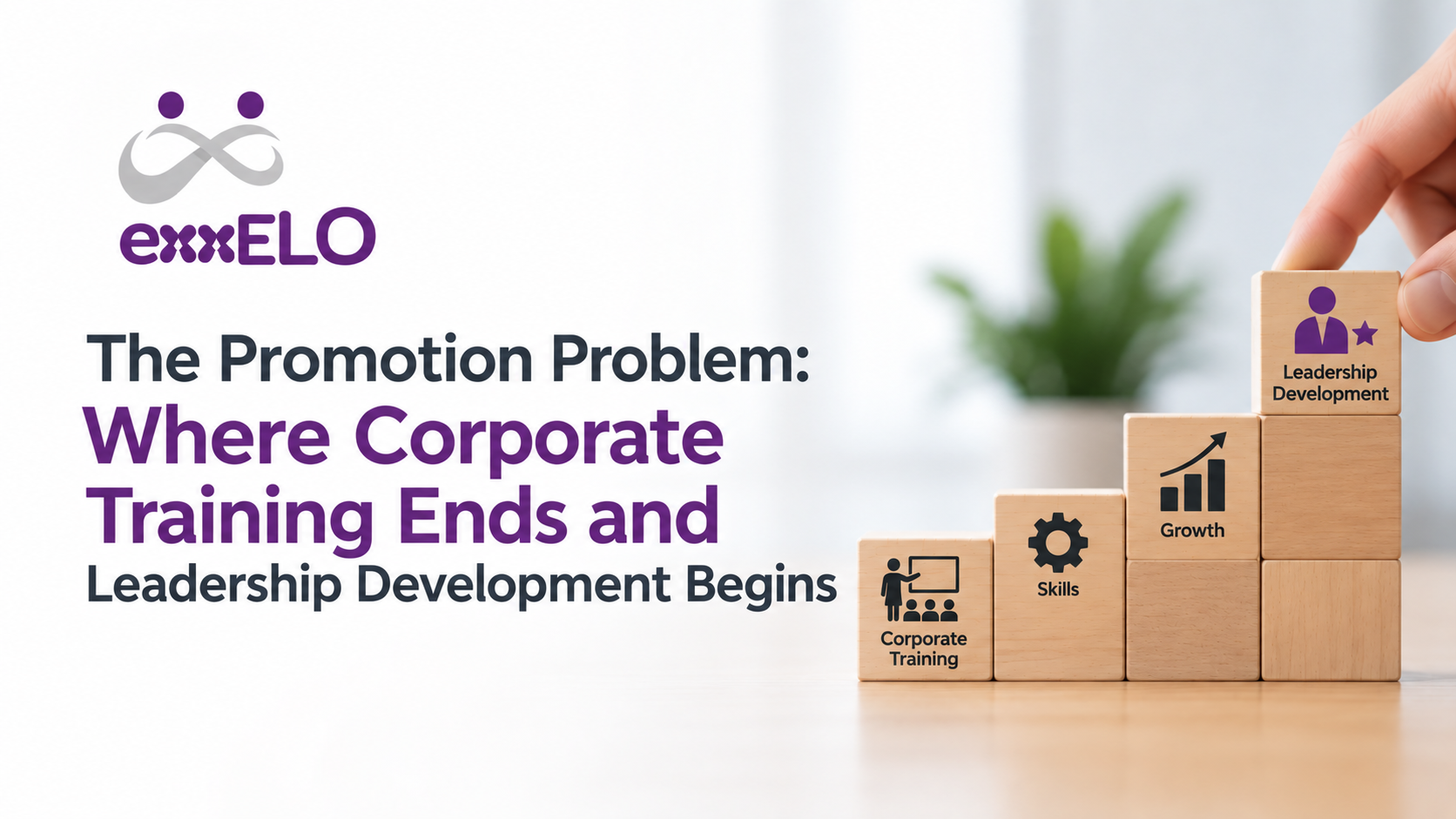
Many skilled employees are promoted into management roles because they performed exceptionally well in their previous positions. Within months, many of them struggle with tasks that have nothing to do with their old technical skills: giving honest feedback, resolving conflict, delegating work, or making calls under pressure. This is the promotion problem. Companies often assume that a strong performer will automatically become a strong leader, and then hand them a training manual instead of real guidance. Working with a firm that offers business coaching in Chennai can help organizations catch this gap early, before it costs them both a good employee and a struggling manager.
Why a Promotion Rarely Comes With Leadership Skills Attached
A salesperson who consistently hits targets gets promoted to sales manager. An engineer who writes clean code gets promoted to team lead. The logic seems sound on paper, since these people clearly understand the work. But managing people is a different discipline from doing the work well. It involves reading people, communicating expectations clearly, and staying calm when plans fall apart. Most organizations do not separate these two skill sets when deciding who gets promoted. As a result, the newly promoted manager is left to figure out leadership on the job, often through trial and error that affects their entire team. This is not a character flaw in the individual. It is a structural gap in how companies prepare people for bigger roles. Recent research reinforces the distinction between individual performance and management capability. Gallup's 2026 research found that frontline supervisors are more commonly selected based on prior performance or experience than on supervisory skills, highlighting the risk of treating success in one role as proof of readiness for another. Gallup's broader 2026 India workplace research similarly recommends selecting managers based on talent and role fit rather than simply past performance, while also emphasizing focused training and development.
Training and Development Are Not the Same Thing
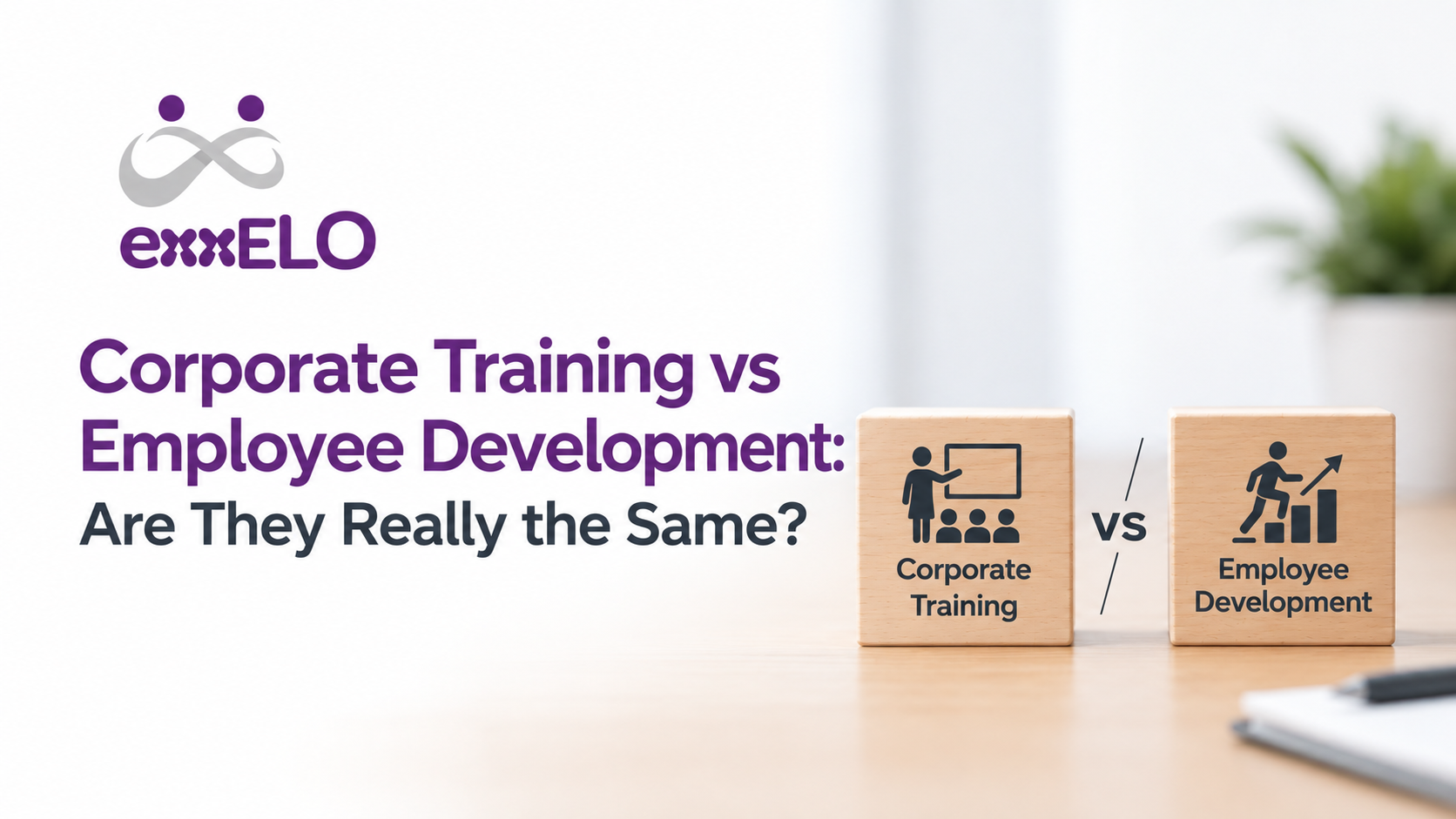
The words training and development are often used interchangeably, but they usually describe different parts of the learning process. Training often focuses on specific knowledge or skills, while development is broader and can involve practice, feedback, coaching, experience, and reflection over time.
What Corporate Training Covers
Training is built around content. It teaches a specific skill, a framework, or a piece of software within a fixed time frame. A two-day workshop on performance reviews, a session on time management, or an online module on compliance are all forms of training. They are useful because they build awareness and give people a shared vocabulary.
What Leadership Development Actually Changes
Development goes beyond information. It focuses on how people apply knowledge, make decisions, and change their behavior over time, especially when the pressure is real rather than simulated in a classroom. Development happens through repeated practice, honest feedback, and reflection spread across weeks and months rather than a single session. A manager can pass every quiz in a training course and still freeze during their first tough conversation with a team member, because the course never asked them to actually change how they behave.
The Visible Signs of the Gap
The distance between training and development shows up in patterns that are easy to spot once you know what to look for.
New Managers Who Avoid Difficult Conversations
Many first-time managers postpone feedback conversations, hoping problems resolve themselves. This avoidance is not always a knowledge problem. It can reflect discomfort with conflict, uncertainty about how to approach the conversation, or limited experience handling difficult situations.
Teams That Lose Direction After a Reshuffle
When a strong individual contributor becomes a manager, their team's performance can temporarily become less consistent as the new manager learns how to set direction, delegate, and hold others accountable.
Decisions That Get Escalated Instead of Made
Another common sign is a new manager who routes even small decisions back up to their own boss. This usually is not laziness. It often reflects a fear of getting it wrong in front of a team that is still watching closely to see whether this person deserves the new title.
Why One-Time Workshops Are Not Enough
A single workshop can raise awareness, but changing established leadership habits usually requires opportunities for practice, feedback, and reinforcement beyond the session itself. This pattern is backed by current workplace learning research. CIPD's leadership development review recommends building in real-world practice and treating leadership development as an ongoing process rather than a one-off event. CIPD's 2026 guidance similarly notes that even well designed training may fail to translate into performance when employees lack the time, permission, or workplace support to apply what they learned. A business consultant in Chennai can help organizations examine whether the problem lies in training design, manager support, role expectations, or the conditions surrounding learning transfer.
What a Strong Leadership Development Approach Includes
Real leadership growth combines several elements that work together over time rather than in isolation.
Coaching Conversations, Not Just Classes
One-on-one coaching allows a manager to work through actual situations they are facing that week, rather than hypothetical case studies. This makes the learning immediately relevant and easier to retain.
Real Work as the Practice Ground
Instead of role playing in a workshop, development uses the manager's actual team, actual projects, and actual decisions as the training ground. The work is directly relevant, giving managers opportunities to apply what they learn in situations they actually face. This approach lines up with CIPD's evidence review, which supports practice linked to real-world situations and experiential learning.
Feedback Loops That Continue After the Program Ends
Development does not stop when a program officially concludes. Regular check-ins, peer discussions, and periodic reviews help new behaviors settle in permanently instead of fading once attention moves elsewhere.
Tracking Behavior Change Over Quarters, Not Days
Meaningful change in how someone leads is measured over months and quarters, not days. Organizations that track behavior shifts over a longer horizon get a clearer picture of whether the learning is being applied and whether meaningful changes are emerging over time. CIPD specifically recommends looking beyond immediate reactions toward applied value and performance impact.
Building the Bridge From Employee to Leader
The transition from doing the work to leading the people who do the work is one of the hardest shifts in any career. It requires unlearning some habits that made someone successful as an individual contributor, such as wanting to solve every problem personally, and replacing them with habits that make a team successful, such as trusting others to solve problems their own way. Structured leadership development programs in India are increasingly built around this exact transition point. The period following a promotion is particularly important because new managers are learning how to balance their previous responsibilities with the demands of leading others.
How Organizations Are Rethinking Leadership Growth
Organizations are increasingly recognizing that leadership capability cannot be built through isolated events scattered across the year. Instead, organizations can combine formal training with coaching, mentorship, feedback, and opportunities to apply new skills. Internal promotions can give new leaders an advantage because they already understand the organization's culture, systems, and relationships. That advantage does not remove the need for leadership development. For smaller and mid-sized businesses, development can also be targeted toward a smaller group of newly promoted managers rather than delivered as a company-wide initiative.
Frequently Asked Questions
What is the difference between corporate training and leadership development? Corporate training focuses on teaching a specific skill or piece of information within a fixed session. Leadership development focuses on changing behavior over time through coaching, practice, and feedback, so the change is lasting rather than temporary. Why do newly promoted managers often struggle? Most promotions are based on past performance in a technical or individual role, not on demonstrated ability to lead people. Without dedicated support after the promotion, new managers are left to learn people management skills through trial and error. How long does leadership development usually take to show results? Meaningful behavior change typically takes several months rather than days or weeks. Organizations that track progress over quarters tend to see more accurate and lasting results than those relying only on immediate post-workshop feedback. Can a single training workshop fix leadership gaps? A workshop can build awareness and introduce useful frameworks, but it rarely changes deep-rooted habits on its own. Lasting change usually requires ongoing coaching, real-world practice, and continued feedback beyond the workshop itself. Is leadership development only for senior executives? No. First-time managers and mid level leaders often need it the most, since this is usually the first point in a career where someone is responsible for other people's work rather than just their own.
Key Takeaway
The promotion problem will not disappear on its own, and no single workshop will solve it either. Closing the gap between corporate training and genuine leadership development requires patience, structured coaching, and a willingness to measure behavior rather than attendance. Organizations that treat leadership growth as an ongoing process give managers more opportunities to practice, receive feedback, and build the capabilities required to handle real pressure. If your organization is rethinking how it prepares employees for leadership roles, you can contact us to discuss an approach built around your team's actual challenges.